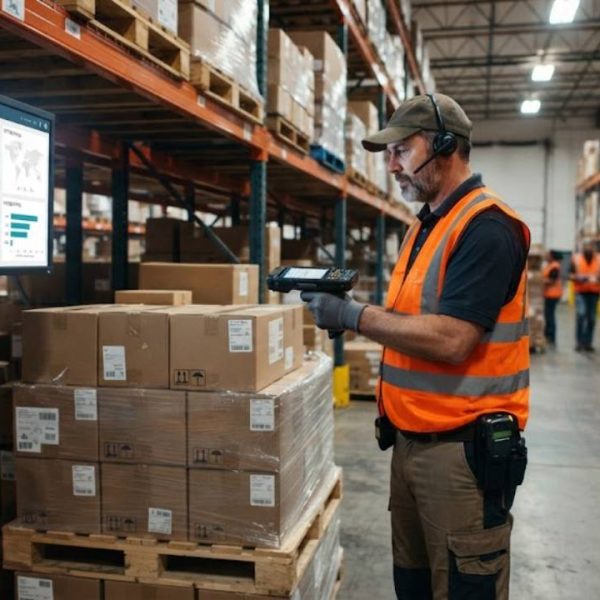
A mid-size freight forwarder once rolled out a new warehouse management system across five countries using a single English-language training manual. Within weeks, workers in three of those countries were making costly picking errors that traced directly back to instructions nobody had fully understood.
Supply chain software rollouts rarely account for language from the start
Logistics technology teams pour enormous effort into choosing the right platform, testing integrations, and training pilot users, yet the actual language of the software and its documentation often gets treated as an afterthought. That gap becomes painfully visible the moment a system goes live across multiple countries at once.
Translation management platforms keep growing logistics operations aligned
As fleet management and warehouse systems expand into new regions, keeping interface text, alerts, and driver instructions consistent becomes a real challenge without the right infrastructure. Teams that adopt a proper translation management platform can update terminology once and push consistent language across every regional deployment instead of manually tracking spreadsheets for each market.
Customs paperwork demands certified accuracy, not approximation
Cross-border shipments routinely require certificates of origin, commercial invoices, and compliance declarations that customs authorities will reject if the translation looks anything less than professional. Logistics companies that build a relationship with a provider of certified translation services avoid the shipment delays that come from documentation getting flagged at the border.
Brazil's logistics sector runs on more than generic Spanish content
Companies expanding distribution into Brazil often mistakenly reuse Spanish-language materials, assuming the two markets are close enough linguistically to share content. Investing in dedicated Portuguese translation services tailored to Brazilian terminology gives warehouse staff and drivers instructions they can actually follow without guessing at meaning.
Warehouse floor workers need instructions, not literal translations
A technically accurate translation of a safety procedure can still fail if it uses phrasing no warehouse worker would naturally use on the floor. Logistics technology providers that involve local operations staff in reviewing translated content catch these mismatches long before they turn into safety incidents.
A case study from cold chain distribution
A cold chain logistics company once expanded its temperature-monitoring software into four new countries using machine-translated alerts, only to discover that critical threshold warnings were being misread by staff in two of those markets. After switching to professionally translated and locally reviewed alert text, response times to temperature deviations improved measurably within a single quarter.
Fleet management dashboards carry more nuance than they appear to
Driver-facing dashboards often pack dense information into small screens, where a mistranslated abbreviation or unit label can lead to real confusion on the road. Companies that treat dashboard translation as seriously as the underlying software engineering avoid the kind of misunderstandings that erode driver trust in the system.
Multilingual customer support becomes unavoidable at scale
Once a logistics platform serves shippers and carriers across several countries, support tickets start arriving in multiple languages whether a company has planned for it or not. Building a translation workflow for support documentation and canned responses early prevents the scramble that happens when volume suddenly spikes in a new market.
Live calls are the harder half of that problem, because a ticket can wait for a translator and a dispatcher on the phone cannot. Interpreters at PoliLingua work over the phone and over video as well as on site, which covers the case where a carrier needs an exception explained in its own language the same hour. Companies that arrange that coverage before a market goes live avoid routing every difficult call back to whichever bilingual colleague is free. The alternative is an escalation path that depends on who picked up.
Search visibility for logistics technology content depends on translation quality
Companies publishing technical content about their platforms find that well-translated pages perform far better in local search results than content run through automated tools alone. That visibility matters directly for logistics technology vendors competing for attention in increasingly crowded regional markets.
Global supply chains depend quietly on clear translation and, just as quietly, on somebody else running the servers. Comparing cloud computing providers has become a routine procurement exercise for logistics firms rather than a technical curiosity. Resilience now gets specified in the contract alongside price.
Compliance documentation changes faster than most teams can translate it
Trade regulations and customs requirements shift regularly, and outdated translated documentation can create liability even when the original English version was updated on time. Logistics companies that build ongoing translation maintenance into their compliance process avoid falling behind when regulations change without warning.
Training new regional staff requires more than a translated slide deck
Onboarding materials that read fine in a translated PDF sometimes fall apart when new hires try to apply them on an actual warehouse floor or in a live dispatch center. Companies that pair professional translation with in-person or video walkthroughs see faster ramp-up times for new regional teams.
Industry associations are pushing standardization across borders
Groups such as FIATA, the international federation representing freight forwarding associations, promote standardized documentation practices that reduce friction in cross-border logistics. Companies that align their translation practices with these standards find it easier to operate consistently across the many jurisdictions a global supply chain touches.
Vendor selection increasingly includes a language capability review
Enterprise logistics buyers evaluating software vendors now routinely ask how a platform handles multilingual deployment before signing a contract. Vendors that can demonstrate a mature approach to translation and localization win deals that competitors lose simply by treating language as a low-priority feature request.
Small terminology inconsistencies create outsized confusion at scale
A single mistranslated term for a shipment status can ripple through dispatch calls, driver questions, and customer complaints across an entire regional operation. Logistics technology teams that maintain a centralized glossary across all translated materials prevent this kind of confusion from compounding as operations grow.
The freight forwarder from the opening story eventually rebuilt its training materials with professional translation and local review across every market it served. Picking errors dropped sharply within months, a reminder that logistics technology only works as well as the language carrying its instructions to the people actually using it.