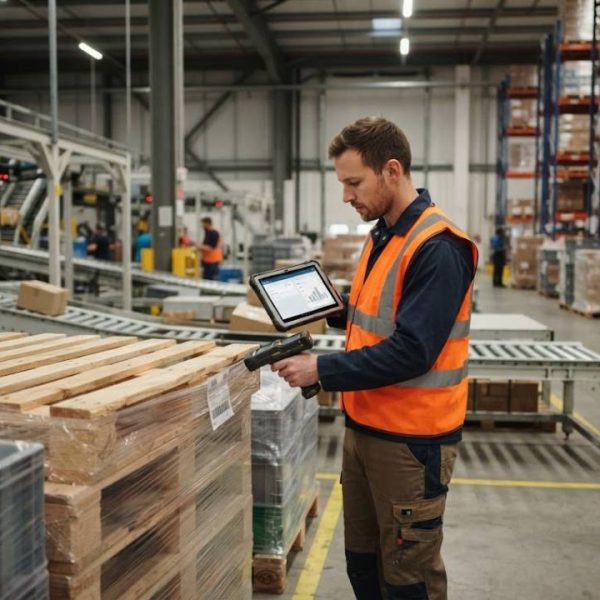
A fleet management platform rolled out to warehouses in five countries hit a wall in its second month: drivers in two regions were logging deliveries incorrectly because a status label had been translated too literally, flipping the meaning of "delayed" and "in transit" on their handheld screens. The software worked perfectly. The words on it did not.
Software Localization Is Not The Same As Translation
Swapping English labels for their dictionary equivalent in another language often breaks logistics software rather than fixing it, because warehouse terms carry operational meaning that a general translator can miss. A word that reads correctly in isolation can still confuse a worker scanning pallets under time pressure.
Teams that treat this as a specialized task, distinct from marketing translation, catch these mismatches before they reach the warehouse floor.
Where Small Errors Cause Big Delays
Fleet tracking dashboards, customs paperwork and driver-facing apps all depend on precise terminology staying consistent across every language version. A single inconsistency between a printed manifest and an app label can stall a shipment at a border checkpoint for hours.
Logistics companies that standardize their terminology early avoid the kind of confusion that turns a minor translation gap into a costly delay.
Technical Accuracy Matters As Much As Fluency
Equipment manuals, safety instructions and maintenance logs need translators who understand the underlying machinery, not just the language. Many logistics technology providers now route this category of content through dedicated technical translation services, since a mistranslated safety instruction carries real operational risk on a warehouse floor.
This distinction becomes especially important when automation systems handle physical equipment that workers interact with directly.
Rolling Out Software Across Multiple Markets
Launching a platform in a new country involves far more than swapping the interface language. Reliable software localization services adapt date formats, units, currency displays and even color conventions that carry different meanings in different markets.
Companies that skip this step often discover the gaps only after users report confusing or contradictory screens, well after launch.
A shipment held at customs is rarely stopped by the goods themselves; it is stopped by a document nobody at the border can verify. Packing lists, certificates of origin and conformity declarations all travel through jurisdictions that expect them in the local language and in an approved form. Logistics teams that budget for certified document translation early treat it as part of the freight cost rather than an emergency expense once the container is already sitting still.
Fleet Vehicles Bring Their Own Documentation Needs
Trucks and delivery vans built for international fleets often ship with manuals, diagnostic software and dashboard interfaces originally written for a single market. Providers offering automotive translation services help fleet operators adapt this material without introducing the kind of ambiguity that confuses maintenance crews.
Getting this wrong tends to surface at the worst possible time, when a driver or mechanic needs a clear instruction during a breakdown rather than a guessing game.
Training Staff Alongside The Software Rollout
Even a perfectly localized platform underperforms if regional staff are not walked through the terminology changes before go-live. Companies that pair a software rollout with a short briefing session for local teams see far fewer support tickets in the first weeks after launch.
This small addition to the rollout plan tends to cost little compared to the disruption caused by weeks of confused, misrouted shipments.
Building A Repeatable Localization Process
The logistics companies with the smoothest multi-country rollouts treat localization as an ongoing process rather than a one-time translation job. Every software update gets pushed through the same review pipeline, so terminology stays consistent release after release.
This discipline, unglamorous as it sounds, is often what separates a platform that scales cleanly across borders from one that generates a steady stream of confused support tickets.