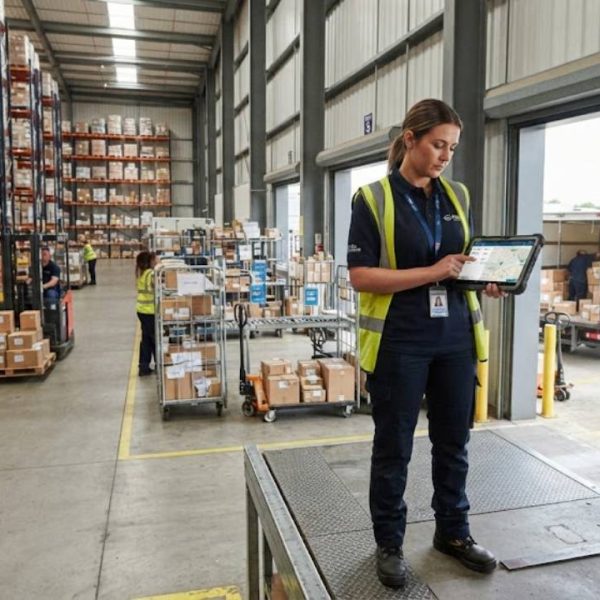
A UK fleet software company once rolled out a new tracking dashboard to a partner warehouse in Athens, only to find that half the staff could not make sense of the alerts because everything remained in English. Deliveries slipped for a week before anyone traced the problem back to the interface itself.
Warehouse software rarely gets tested outside its home market
Companies building fleet tracking and warehouse automation tools usually design and test everything with a single language in mind. The moment that software crosses into a new country, small gaps in translation turn into real operational slowdowns.
A translation workflow platform keeps growing software projects on track
As a logistics technology company adds new markets, dashboards, alerts, and manuals all need updating in parallel without falling out of sync. A dedicated translation workflow platform keeps every version of that content organized instead of scattered across separate spreadsheets and email chains.
Contracts with overseas partners still need certified paperwork
Signing a distribution or licensing agreement with a foreign logistics partner often means submitting documents that government bodies will only accept with proper certification. A professionally certified translation of these contracts prevents the kind of rejection that can stall a partnership before it even begins.
Greek logistics hubs are drawing more international software providers
Greece's ports and distribution centers have become an increasingly attractive entry point for companies expanding fleet and warehouse technology across southeastern Europe. Arranging Greek business translation for onboarding materials and support documentation helps local teams adopt new systems without the usual early confusion.
Automated translation tools misread technical logistics terms
Free translation tools frequently stumble over the specific vocabulary used in fleet management, from shipment status codes to warehouse zone labels. A mistranslated alert in this context is not a minor inconvenience, it can mean a driver missing a critical delivery window.
A cautionary story from a warehouse automation rollout
A logistics technology firm once deployed its inventory system to a new regional hub without properly translating the exception alerts built into the software. Staff began ignoring warnings they could not fully understand, and the resulting backlog took weeks to clear once the alerts were finally translated correctly.
Driver-facing screens leave no room for translation shortcuts
Interfaces built for drivers on the road often compress information into a few words, where a poorly translated abbreviation can create genuine confusion at a critical moment. Companies that treat these small screens with the same translation care as their full documentation avoid costly misunderstandings.
Multilingual support requests are inevitable as fleets scale
Once a fleet tracking platform operates across several countries, support tickets start arriving in multiple languages regardless of what the original design anticipated. Setting up a translation process for support documentation early avoids a scramble when ticket volume unexpectedly climbs.
Search visibility depends on more than a simple word swap
Technical content translated with genuine care tends to rank far better in local search results than material pushed through an automated tool. For a logistics technology company, that visibility difference can shape whether local businesses find their product at all.
Fleet tracking software adapts for international warehouses by turning vehicle data into scheduling decisions. The same telemetry is what lets operators plan car repairs and maintenance around routes instead of reacting to breakdowns. Predictive servicing is now a logistics function rather than a garage one.
Regulations shift faster than internal translations can keep up
Customs codes and transport regulations change frequently, and documentation translated once internally can quietly become outdated without anyone noticing. Building translation updates into a compliance review cycle prevents outdated guidance from lingering in the system.
Training new regional teams takes more than a translated manual
A perfectly translated manual does not always transfer well when new staff need to apply those instructions directly on a warehouse floor. Companies that pair professional translation with hands-on onboarding see faster, more confident adoption from their regional teams.
Industry bodies emphasize clear communication across supply chains
Groups such as the Chartered Institute of Logistics and Transport regularly highlight how communication breakdowns contribute to costly delays across international supply chains. Companies that follow this guidance tend to build translation into their expansion plans rather than treating it as an afterthought.
Smaller software vendors can compete with established players
A small fleet software startup faces the same localization expectations as a much larger competitor once it enters a new market. Partnering with experienced translators on an as-needed basis lets a smaller vendor match that standard without building an in-house language team.
Consistent terminology protects a product's reputation
When different translators handle updates to the same software without a shared reference, technical terms can drift and confuse returning users. A maintained glossary keeps every release feeling like a single coherent product no matter how many languages it supports.
The fleet software company from the opening story eventually rebuilt its onboarding materials with proper translation support before expanding to its next region. The Athens rollout that followed went smoothly, and the lesson stuck: software built for global logistics needs language planning from day one, not as a fix after something breaks.